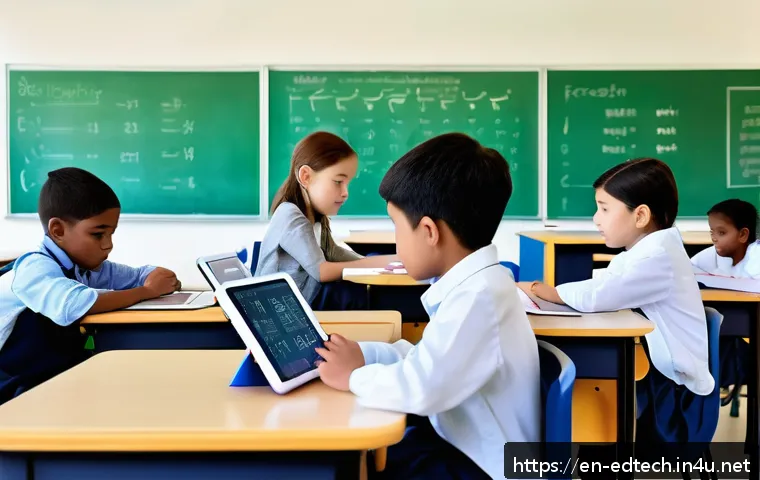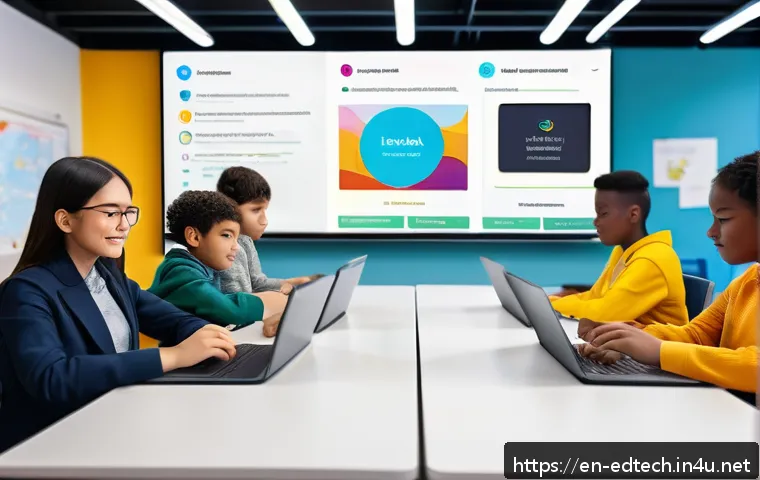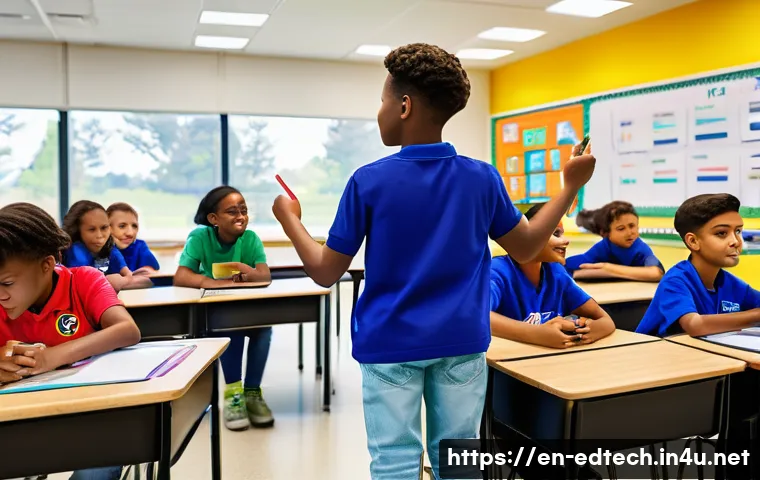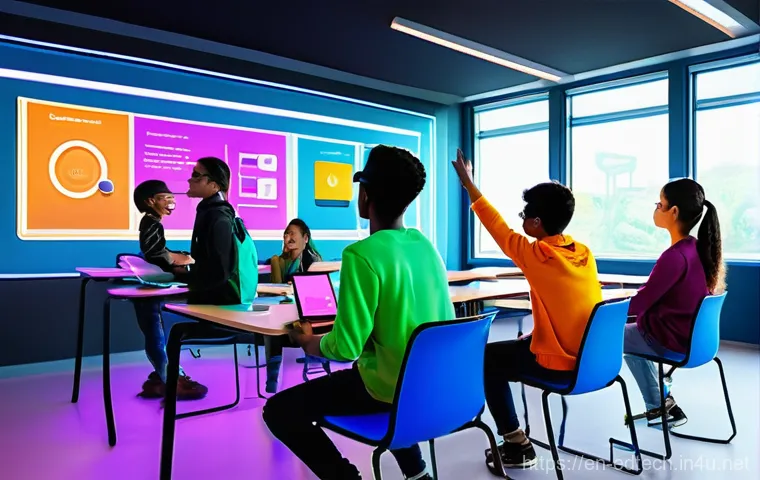
I remember the days when learning felt like a chore, filled with endless textbooks and lectures that sometimes struggled to hold my attention. But honestly, as an “English blog influencer” who’s always got an eye on the pulse of innovation, I’ve been absolutely captivated by how quickly the world of education is transforming.
Educational technology, or EdTech, isn’t just about bringing screens into classrooms anymore; it’s a dynamic, ever-evolving landscape that’s completely revolutionizing how we learn, grow, and even teach.
It’s about creating flexible, inclusive, and accessible pathways for everyone, regardless of where they are in their learning journey. Now, imagine taking that inherent human drive for challenge, progress, and rewards, and applying it directly to education.
That’s the magic of gamification, and when paired with cutting-edge EdTech, it’s nothing short of a learning superpower! I’ve personally seen how integrating game-like elements—think points, badges, leaderboards, and interactive quests—can ignite a spark in learners, turning passive consumption into active, motivated engagement.
We’re talking about a future where AI personalizes challenges in real-time, tailoring content to individual strengths and weaknesses, making learning feel less like a one-size-fits-all lecture and more like a custom-built adventure.
This isn’t just a trend; it’s a fundamental shift that promotes critical thinking, boosts retention, and genuinely makes learning fun, especially with immersive experiences brought to life by VR and AR.
The global EdTech market is projected for massive growth, showing just how impactful these innovations truly are, extending beyond traditional settings into lifelong learning and professional development.
It’s thrilling to witness how these forces are converging to make education not just more effective, but truly enjoyable, preparing us for an ever-evolving world.
Ready to discover how you can leverage these incredible advancements? Let’s dive deeper and truly unlock the potential of modern learning!
Unlocking Engagement: The Power of Play in Learning

I remember those days in school where the textbook felt like a heavy anchor, dragging down any flicker of excitement I had for a new subject. Honestly, it often felt like an uphill battle just to stay awake, let alone actively absorb information. But then, as I started diving deeper into the world of educational innovation, I witnessed a transformation that genuinely blew me away: the incredible power of play. It’s not just about making things “fun” in a superficial way; it’s about tapping into something fundamentally human – our innate drive for challenge, progress, and reward. When I first encountered learning platforms that incorporated points, badges, and interactive quests, it was like flipping a switch. Suddenly, the passive act of reading became an active mission, and the desire to earn that next badge or climb a leaderboard fueled a level of focus I hadn’t seen before. This isn’t just theory; I’ve personally used a language app that gamified vocabulary acquisition, and the difference in my retention and motivation compared to traditional flashcards was night and day. It turns a chore into a delightful challenge, and that, my friends, is where true learning begins to flourish. We’re talking about a paradigm shift that encourages persistence, cultivates problem-solving skills, and most importantly, ignites a genuine passion for discovery.
Why Traditional Methods Often Miss the Mark
Traditional learning, for all its merits, often struggles with the fundamental human need for instant feedback and tangible progress. Sitting through long lectures or slogging through pages of dense text can be incredibly disheartening when you don’t immediately see how much you’ve learned or where you stand. I’ve heard countless stories, and experienced it myself, of feeling lost or disengaged simply because the reward for effort felt too far off. This lack of immediate gratification can be a significant barrier to sustained motivation, especially for learners of all ages who are accustomed to more interactive and responsive digital experiences in other aspects of their lives. It’s not that these methods are inherently bad, but rather that they often don’t leverage the psychological triggers that keep us engaged and moving forward in the way modern digital experiences do.
The Immediate Spark of Gamification
What I’ve found so compelling about gamification is its ability to create an immediate spark. It introduces elements like quick wins, visible progress bars, and the anticipation of unlocking new levels, which are incredibly powerful motivators. Think about it: when you earn points for completing a module, or a badge for mastering a skill, it’s an instant, tangible acknowledgment of your effort. This immediate feedback loop is crucial. It tells you, “Hey, you’re doing great, keep going!” or “Okay, you struggled here, let’s try again.” This positive reinforcement, coupled with the competitive or collaborative aspects of leaderboards and team challenges, can transform a monotonous learning task into an exciting quest. I’ve seen students who were previously disengaged become completely absorbed, strategizing how to earn more points or help their team succeed. It’s truly remarkable how a few well-placed game mechanics can ignite such a powerful drive for learning.
Beyond the Textbook: Personalized Journeys with AI
One of the most exciting advancements in EdTech, and something I’ve been incredibly passionate about exploring, is how Artificial Intelligence is moving us light-years beyond the one-size-fits-all approach of traditional education. Honestly, for years, I felt like I was often either bored because the material was too easy, or completely overwhelmed because it was moving too fast in areas where I struggled. It’s like trying to fit every single person into the same pair of shoes; it just doesn’t work for everyone. But with AI, that limitation is rapidly disappearing. Imagine a system that acts like your very own personal tutor, not just in concept, but in genuine, real-time adaptation. It learns your strengths, identifies your weaknesses with incredible precision, and then meticulously crafts a learning path that is uniquely yours. This isn’t just about showing you different content; it’s about adjusting the *difficulty*, the *pace*, and even the *format* of the material based on how you respond. I’ve personally experienced platforms that use AI to suggest additional practice questions when I falter on a specific concept, or skip ahead when I demonstrate mastery. This level of personalized feedback and customized content feels less like a generic lesson and more like a tailored conversation, making learning far more efficient and far less frustrating. It’s truly like having an expert guide always at your side, understanding exactly what you need at any given moment to maximize your potential.
AI as Your Personal Tutor
The idea of an AI acting as a personal tutor might sound like something out of a sci-fi movie, but it’s very much a reality now, and it’s constantly improving. What really impresses me is how these systems can dissect your learning patterns. They track how long you spend on a question, the types of errors you make, and even your response times. With this data, the AI isn’t just grading you; it’s *understanding* you. I’ve found that this kind of granular analysis allows the AI to pinpoint exactly where misconceptions lie, rather than just marking an answer wrong. For example, if I consistently misinterpret a certain type of math problem, the AI won’t just tell me to review the chapter; it might provide specific mini-lessons, alternative explanations, or even link to external resources tailored to address that exact gap in my understanding. This is a level of individualized attention that simply isn’t feasible with human tutors on a large scale, making high-quality, personalized education accessible to so many more people.
Adaptive Learning in Action
Adaptive learning, powered by AI, is where the rubber truly meets the road. It’s about dynamic adjustment, constantly responding to your interactions. What I’ve seen firsthand is how this leads to incredibly efficient learning. If you’re flying through a topic, the system recognizes your proficiency and moves you forward, preventing boredom and wasted time. Conversely, if you’re struggling, it doesn’t just leave you behind. Instead, it offers different approaches, breaks down complex ideas into smaller chunks, or provides supplementary materials until you grasp the concept. This isn’t about dumbing down content; it’s about finding the optimal challenge level for each individual. For instance, I used an adaptive learning platform for a coding course, and I loved how it would generate unique coding challenges based on my previous attempts, ensuring I wasn’t just memorizing solutions but truly understanding the underlying logic. This kind of responsive, intelligent adaptation makes learning feel less like a rigid curriculum and more like an engaging dialogue, ultimately leading to deeper understanding and far greater retention.
Immersive Worlds: Learning Through VR and AR
If you’re anything like me, you probably remember struggling to visualize complex concepts from diagrams in a textbook. Whether it was the intricate workings of the human heart or the ancient architecture of a Roman temple, sometimes words and flat images just don’t cut it. That’s why, when I first experienced learning through Virtual Reality (VR) and Augmented Reality (AR), it felt like stepping into a whole new dimension of understanding. These technologies aren’t just cool gadgets; they’re fundamentally changing how we can interact with and comprehend information. Imagine being able to virtually dissect a frog without any ethical concerns, or walking through a historical event as if you were truly there. I recall a specific VR experience where I could manipulate molecules in a 3D space, seeing their bonds and interactions from every angle. It transformed a theoretical chemistry lesson into a tangible, memorable experience. It’s a game-changer for engagement because it doesn’t just tell you about a concept; it lets you *experience* it. This deep immersion fosters a level of intuitive understanding that traditional methods often can’t touch, making learning far more impactful and, dare I say, utterly thrilling. It’s about moving beyond passive observation to active, multi-sensory participation.
Stepping Inside the Curriculum
The concept of “stepping inside the curriculum” is exactly what VR and AR offer, and it’s incredibly powerful. Instead of just reading about the Amazon rainforest, imagine wearing a VR headset and being virtually transported there, hearing the sounds, seeing the wildlife, and understanding the ecosystem from within. Or, for aspiring surgeons, practicing complex procedures on virtual patients with haptic feedback, making mistakes without real-world consequences, and refining their skills in a safe, controlled environment. What I’ve found so remarkable is how these immersive tools bridge the gap between abstract knowledge and concrete experience. They allow for exploration and experimentation in ways that would be impossible or impractical in a traditional classroom. This isn’t just about making learning more fun; it’s about making it profoundly more effective by engaging multiple senses and providing a context that static materials simply cannot replicate. It creates memories that stick, making recall far easier and deeper understanding far more likely.
Practical Applications in Education
The practical applications of VR and AR in education are truly vast and continue to expand. For science students, virtual labs offer safe and cost-effective ways to conduct experiments that might be too dangerous or expensive in real life. History buffs can explore ancient civilizations, art students can examine sculptures from every angle, and architecture students can walk through their designs before they’re ever built. I’ve even seen AR apps that overlay digital information onto physical objects, turning a simple poster into an interactive learning experience with videos and 3D models. For example, a student could point their phone at a picture of a dinosaur, and an AR model could pop up on their screen, allowing them to walk around it and learn facts. This integration of digital content with our physical world makes learning incredibly dynamic and accessible, often right from the palm of your hand. These technologies are making once-inaccessible experiences a reality for students everywhere, democratizing high-quality, experiential learning.
Building Skills for Tomorrow: Future-Proofing Education
The world is changing at an unprecedented pace, and what employers look for today is vastly different from even a decade ago. It’s no longer just about memorizing facts; it’s about how you *think*, how you *solve problems*, and how you *adapt*. This is where modern EdTech, especially when combined with gamification, becomes an absolute powerhouse for future-proofing our skills. I’ve seen firsthand how these innovative approaches foster critical thinking in ways traditional methods often struggle to achieve. When learners are faced with gamified challenges, they’re not just recalling information; they’re strategizing, experimenting, and analyzing outcomes, which are the very muscles needed for complex problem-solving in any field. For example, rather than just learning about economic theories, students might engage in a simulated business game where their decisions directly impact a virtual economy, forcing them to think critically about cause and effect. This hands-on, iterative approach—often encouraged by immediate feedback loops—builds resilience and a growth mindset, preparing learners not just for a specific job, but for a lifetime of continuous learning and evolution in their careers. It’s about equipping them with the tools to navigate an uncertain future with confidence.
Cultivating Critical Thinking and Problem-Solving
One of the most profound benefits I’ve observed is how EdTech and gamification actively cultivate critical thinking and problem-solving. Instead of passively receiving information, learners are often placed in scenarios where they must analyze, evaluate, and synthesize information to overcome a challenge. Think about educational games that require players to manage resources, make ethical decisions in simulated environments, or debug code to advance. These aren’t just entertainment; they’re rigorous training grounds for the mind. I’ve personally seen how these experiences force learners to go beyond superficial understanding, prompting them to ask “why?” and “what if?” The iterative nature of many gamified platforms, where failure is a chance to learn and try again, also instills a crucial problem-solving mindset—that obstacles are opportunities, not endpoints. This resilience and analytical approach are invaluable skills that transcend academic subjects and are desperately needed in today’s complex professional landscape.
Collaboration and Creativity in Digital Spaces
Beyond individual skills, modern EdTech environments are also brilliant at fostering collaboration and creativity. Many platforms are designed with multiplayer or team-based challenges that necessitate communication, negotiation, and shared problem-solving. I’ve been fascinated by how students in different locations can collaborate on a virtual project, each contributing their unique skills to achieve a common goal, much like teams in the professional world. These digital spaces often remove geographical barriers, allowing for diverse perspectives to converge. Furthermore, the tools available within these platforms can spark incredible creativity, whether it’s designing a virtual world, composing digital music, or creating interactive presentations. The freedom to experiment and build within these structured yet flexible environments encourages innovative thinking. I truly believe that by providing safe and engaging digital spaces for collaboration and creative expression, we’re not just preparing students for future jobs, but for a future where adaptability and collaborative innovation are key to success.
| EdTech Innovation | Key Benefit | Real-World Example (Application) |
|---|---|---|
| Gamification | Boosts motivation and engagement, encourages persistence | Language learning apps with streak systems and leaderboards |
| AI-Powered Adaptive Learning | Personalizes content and pace, targets individual needs | Math platforms adjusting difficulty based on student performance |
| Virtual Reality (VR) | Immersive experiential learning, visualization of complex concepts | Virtual tours of historical sites or human anatomy exploration |
| Augmented Reality (AR) | Overlays digital info onto physical world, interactive engagement | AR apps that bring textbook diagrams to life with 3D models |
| Collaborative Platforms | Fosters teamwork, communication, and shared problem-solving | Online project management tools for group assignments |
From Passive to Proactive: The Gamified Classroom
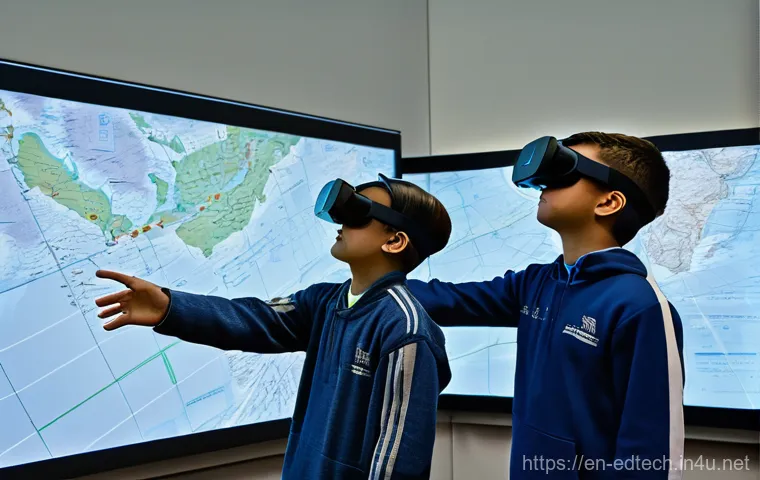
For too long, the traditional classroom model often positioned students as passive recipients of information, expected to quietly absorb what was presented to them. But if you ask me, that’s a recipe for disengagement and missed opportunities! What I’ve seen firsthand with the integration of gamification into learning environments is a monumental shift from this passive consumption to truly proactive, learner-driven engagement. It’s about empowering students to take ownership of their educational journey, transforming them from mere audience members into active participants and even protagonists in their own learning story. When learning becomes a series of challenges to overcome, quests to complete, and levels to master, students naturally become more invested. They’re not just waiting to be told what to do next; they’re actively seeking out the next task, strategizing their approach, and celebrating their progress. I’ve watched students who once seemed uninterested suddenly light up, discussing strategies with peers and eagerly tackling complex problems because there’s a clear goal and a visible reward. This sense of agency is incredibly powerful and, in my opinion, essential for fostering lifelong learners who are genuinely curious and self-motivated. It redefines the teacher’s role too, moving them from lecturers to facilitators, guiding students through their personalized learning adventures.
Shifting from Instructor-Led to Learner-Driven
The beauty of a gamified classroom is how it gently, yet firmly, nudges the learning experience from being purely instructor-led to becoming significantly more learner-driven. In a traditional setting, the teacher often dictates the pace and direction. However, when elements like choice, consequence, and self-directed progression are introduced through game mechanics, students naturally begin to chart their own course. I’ve observed teachers setting up “quest boards” where students can choose which topics to tackle next, or “skill trees” where they unlock advanced concepts only after mastering foundational ones. This freedom, coupled with the clear objectives and feedback inherent in gamified systems, means students are no longer just following instructions; they are making strategic decisions about their learning path. This empowers them to take responsibility for their progress and fosters a sense of autonomy that is incredibly motivating. It transforms the classroom into a dynamic ecosystem where students are explorers, not just passengers, on their educational journey.
Empowering Student Ownership
Empowering student ownership is perhaps one of the most vital outcomes of the gamified classroom, and it’s something I get truly excited about. When students are given agency over their learning, they develop a deeper connection to the material and a greater sense of accountability. I’ve personally seen how clear objectives, progress tracking, and reward systems inherent in gamified approaches make students feel like they are truly in control of their achievements. Instead of simply being graded by an external authority, they earn points, badges, or “experience points” through their own efforts, making the learning feel more like an internal accomplishment. This builds confidence and self-efficacy. When I think back to my own school days, the times I felt most engaged were when I had a say in what I was learning or how I was presenting it. Gamification amplifies this feeling, turning abstract academic goals into concrete, achievable milestones that students are intrinsically motivated to conquer. This ownership is what transforms education from a passive requirement into an active, personal pursuit.
Real-World Impact: EdTech’s Reach Beyond Schools
It’s easy to think of EdTech primarily in terms of classrooms and traditional schooling, but that would be missing a huge part of the picture! What I’ve seen over the past few years is how these innovations are extending far beyond the conventional educational system, permeating nearly every aspect of lifelong learning and professional development. The reality is, learning doesn’t stop when you graduate, whether that’s from high school or university. The need to acquire new skills, stay current with industry trends, or even just pursue a personal passion is constant. And honestly, EdTech has made this continuous learning more accessible and engaging than ever before. Think about busy professionals who can’t take time off for traditional courses, or individuals in remote areas with limited access to specialized training. EdTech platforms offer flexible, on-demand solutions that fit into diverse schedules and geographical constraints. I myself have used online platforms to pick up new digital marketing skills, and the ability to learn at my own pace, often through gamified modules that kept me motivated, was absolutely invaluable. It’s truly democratizing education, making high-quality learning resources available to anyone with an internet connection, regardless of their age, location, or previous educational background.
Lifelong Learning for Adults
For adults, lifelong learning isn’t just a nice-to-have; it’s a necessity in today’s rapidly evolving job market. EdTech has revolutionized how adults can upskill, reskill, or simply explore new hobbies. I’ve spoken with countless people who, thanks to online courses and interactive learning apps, have successfully transitioned into new careers, mastered a musical instrument, or learned a new language. The flexibility offered by these platforms is a huge draw. You can often learn at your own pace, on your own schedule, fitting education around work, family, and other commitments. What really stands out to me is how gamification makes this continuous learning process so much more palatable and sustainable. Earning badges for completing modules in a professional development course, or seeing your progress accumulate over weeks in a photography class, provides that much-needed sense of achievement and keeps motivation high. It turns what could be a daunting task into an enjoyable, rewarding journey, proving that the joy of learning isn’t just for kids.
Professional Development Transformed
The impact of EdTech on professional development has been nothing short of transformative. Gone are the days when companies had to fly employees across the country for expensive, time-consuming training seminars. Now, organizations can leverage sophisticated online learning platforms to deliver high-quality, standardized training that’s both cost-effective and highly engaging. I’ve seen companies implement gamified training modules for everything from cybersecurity awareness to sales techniques, with incredible results in terms of employee retention and understanding. The ability to track individual progress, offer personalized feedback, and even simulate real-world scenarios through VR or AR, means employees aren’t just passively sitting through a presentation; they’re actively participating and applying what they learn. This leads to more effective skill acquisition and, ultimately, a more competent and adaptable workforce. It’s about empowering employees to continuously grow and adapt, directly contributing to both their personal career progression and the overall success of their organization.
Making Learning Stick: The Psychology Behind Gamification’s Success
Have you ever wondered why some things you learn just stick with you, while others seem to vanish almost as soon as the test is over? It’s something I’ve thought about a lot, and through my exploration of EdTech, I’ve realized that gamification isn’t just a clever trick; it’s deeply rooted in sound psychological principles that are proven to enhance memory and motivation. It taps into our brain’s reward system, leveraging neurochemicals like dopamine to create positive associations with the learning process. When you earn a point, unlock a new level, or receive positive feedback, your brain gets a little hit of dopamine, which reinforces that action and makes you want to repeat it. It’s a powerful feedback loop that makes learning feel intrinsically rewarding, rather than just an external obligation. This isn’t some fleeting fad; it’s a scientifically backed approach that understands how our brains are wired for engagement and achievement. The feeling of progression, the satisfaction of overcoming a challenge, and the joy of seeing tangible results all contribute to a learning experience that is not only effective but genuinely enjoyable, ensuring that the knowledge gained truly settles in for the long haul. It’s not just making learning fun; it’s making it *smarter* by aligning with how our minds naturally thrive.
Dopamine, Motivation, and Memory
The role of dopamine in making learning stick is absolutely fascinating, and it’s a cornerstone of why gamification is so effective. Every time we achieve a small goal in a gamified learning environment – whether it’s answering a question correctly, earning a badge, or seeing our progress bar fill up – our brain releases dopamine. This neurochemical is intrinsically linked to pleasure, motivation, and memory formation. What I’ve learned is that this “dopamine hit” isn’t just about feeling good; it actively reinforces the behaviors that led to that reward, making us more likely to repeat them. It also strengthens the neural connections associated with the information we just processed, helping it move from short-term to long-term memory. So, when you’re excitedly tackling challenges in an EdTech game, you’re not just having fun; you’re literally training your brain to associate learning with positive reinforcement, making the process itself more appealing and the information more memorable. It’s a powerful feedback loop that keeps us coming back for more, and critically, helps us retain what we’ve learned.
The Joy of Achievement
Beyond the neurochemical explanations, there’s a profound human element at play: the sheer joy of achievement. We all crave that feeling of accomplishment, of mastering something new, and gamification excels at breaking down large, daunting learning goals into smaller, conquerable milestones. Each badge, each level completed, each virtual trophy earned provides a concrete representation of progress and mastery. I’ve found that this constant stream of achievable goals prevents learners from becoming overwhelmed and instead fuels a continuous cycle of motivation. When you can visually track your progress on a leaderboard or see your skill tree expand, it provides a powerful sense of momentum. This isn’t just about extrinsic rewards; it taps into our intrinsic desire for competence and growth. The feeling of “I did it!” after struggling through a difficult module, or the pride of seeing your name on a top score list, is incredibly validating. This celebration of small victories creates a positive emotional connection to learning, making it a source of genuine satisfaction rather than just another item on a to-do list. It’s this profound sense of achievement that cements learning and builds lasting confidence.
Wrapping Things Up
Whew, what an incredible journey we’ve had exploring the transformative power of EdTech! It’s truly mind-blowing to think how far we’ve come from dusty textbooks and rote memorization. What really excites me is seeing how these innovations—from gamification to AI, and VR/AR—aren’t just making learning “easier,” but genuinely richer, more engaging, and incredibly personalized. It’s about building a future where education isn’t a chore, but an exhilarating adventure that keeps us growing, adapting, and discovering new passions throughout our lives. I honestly believe we’re just scratching the surface of what’s possible, and I can’t wait to see what new horizons we’ll explore together in the world of learning.
Useful Info to Keep in Your Back Pocket
1. Don’t be afraid to experiment with different EdTech platforms! Many offer free trials or introductory modules, so you can test the waters and find what truly resonates with your learning style. There’s a whole world of apps out there designed to make learning more enjoyable.
2. Set clear, bite-sized goals for your learning journey. Whether it’s mastering a new vocabulary set on a gamified language app or completing one module of an online course, breaking it down makes it less daunting and more rewarding.
3. Leverage AI tools for personalized learning. Look for platforms that adapt to your pace and provide customized feedback, which can significantly enhance your understanding and retention.
4. Seek out opportunities for immersive learning, even if it’s just a quick AR experience on your smartphone or a free VR demo. Experiencing concepts in 3D can drastically change your comprehension.
5. Actively participate in online communities or discussion forums related to your learning. Sharing insights, asking questions, and collaborating with others can deepen your understanding and keep you motivated.
Key Takeaways for the Modern Learner
The landscape of education is undergoing a profound and exciting transformation, moving away from rigid, one-size-fits-all models to dynamic, personalized experiences. We’ve seen how gamification ignites motivation and transforms passive learners into active participants, making the journey feel like a captivating quest rather than a dull task. Furthermore, the intelligent hand of AI is crafting bespoke learning paths, adapting to individual strengths and weaknesses, ensuring that every minute spent learning is incredibly efficient and effective. Imagine having a personal tutor who knows exactly how you learn best—that’s the power AI brings to the table. Beyond that, immersive technologies like VR and AR are literally allowing us to step inside our lessons, turning abstract concepts into tangible, unforgettable experiences that stick with us long after the “class” is over. Most importantly, these innovations aren’t just about making learning “fun” for the sake of it; they’re strategically building the critical thinking, problem-solving, and collaborative skills that are absolutely essential for navigating our rapidly changing world. It’s about empowering lifelong learners, equipping them to confidently face the challenges and opportunities of tomorrow, whether in a formal classroom or through continuous professional development. This new era of EdTech is truly about unlocking our full potential, making education a joyful, empowering, and continuous adventure for everyone.
Frequently Asked Questions (FAQ) 📖
Q: What exactly is gamification in EdTech, and why is everyone talking about how engaging it is?
A: Oh, this is one of my favorite topics! At its heart, gamification in EdTech is about taking those fun, addictive elements from games—you know, points, badges, leaderboards, and even storytelling or quests—and weaving them into educational experiences to make learning more interactive and motivating.
It’s like turning your study session into an exciting adventure, rather than a dull task. What I’ve personally observed, and what research strongly backs up, is that this approach dramatically boosts student engagement.
When you’re earning points for mastering a concept or competing on a leaderboard, it taps into our natural desire for achievement and a little friendly competition.
This isn’t just about superficial rewards; it actually triggers our brain’s reward system, making us more motivated, improving knowledge retention, and fostering a deeper connection with the material.
I mean, who wouldn’t prefer solving a “quest” to understand complex concepts over just passively reading a textbook? It truly transforms passive learning into active, driven participation.
Q: How do those advanced technologies like
A: I, VR, and AR actually fit into this new EdTech world? Are they just fancy buzzwords? A2: That’s a fantastic question, and trust me, they are far from just buzzwords!
These technologies are the real MVPs, truly revolutionizing what EdTech can do. Think about AI for a moment: it’s not just automating tasks; it’s making learning incredibly personal.
AI algorithms can analyze how you learn, what you’re good at, and where you might need a little extra help. Then, it tailors content, adjusts difficulty levels, and even suggests resources specifically for you, creating a truly customized learning path.
I’ve seen firsthand how this can make students feel more confident and improve their academic performance because the content truly aligns with their strengths and preferences.
Now, when we talk about VR (Virtual Reality) and AR (Augmented Reality), we’re stepping into immersive learning. Imagine exploring Ancient Egypt, conducting a risky chemistry experiment, or dissecting a virtual heart, all from your classroom or living room without any real danger.
VR transports you to entirely new, interactive environments, while AR overlays digital information onto your real world, like seeing a 3D model of a molecule floating above your desk.
These technologies make complex concepts incredibly tangible, enhancing engagement, boosting knowledge retention, and offering safe, hands-on experiences that would be impossible or too dangerous in real life.
It’s not just about flashy graphics; it’s about making learning deeply experiential and memorable.
Q: Beyond just making learning ‘fun,’ what are the real, tangible benefits learners can actually expect from all these EdTech advancements?
A: That’s the million-dollar question, right? While making learning fun is a huge win in itself—because engaged learners are successful learners—the benefits go so much deeper than just enjoyment.
From what I’ve experienced and seen across the industry, these EdTech innovations, especially with gamification, AI, and immersive tech, significantly improve several key areas.
Firstly, we’re talking about enhanced knowledge retention. When learning is interactive, challenging, and emotionally engaging, information sticks much better than with traditional methods.
Studies have even shown significant increases in retention rates with gamified learning. Secondly, these tools foster critical thinking and problem-solving skills.
Gamified scenarios often require strategizing, adapting to challenges, and making decisions with real-time feedback, preparing learners for real-world complexities.
And let’s not forget the accessibility and inclusivity aspect. AI-driven personalized learning can adapt to diverse learning styles and even provide support for students with disabilities, breaking down barriers to education.
Finally, these advancements aren’t just for academic settings; they extend powerfully into lifelong learning and professional development. With the job market constantly evolving, EdTech is becoming crucial for upskilling and reskilling the workforce, making sure people of all ages can stay relevant and thrive.
It’s about building a future where learning is not only more effective but also genuinely prepares us for an ever-changing world.