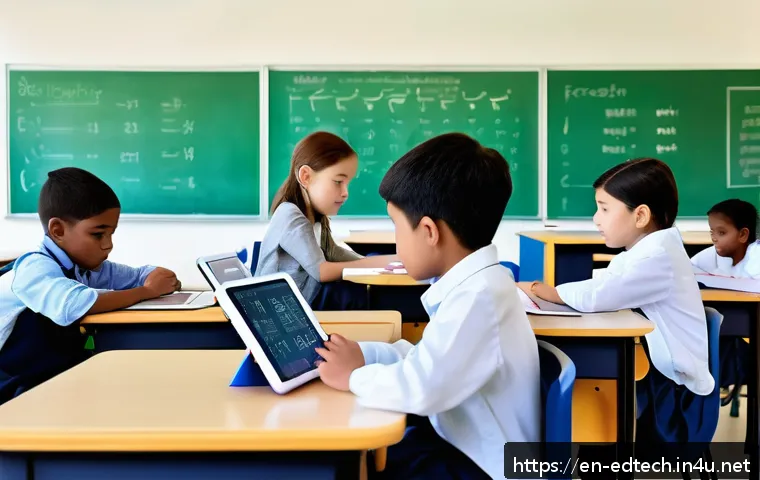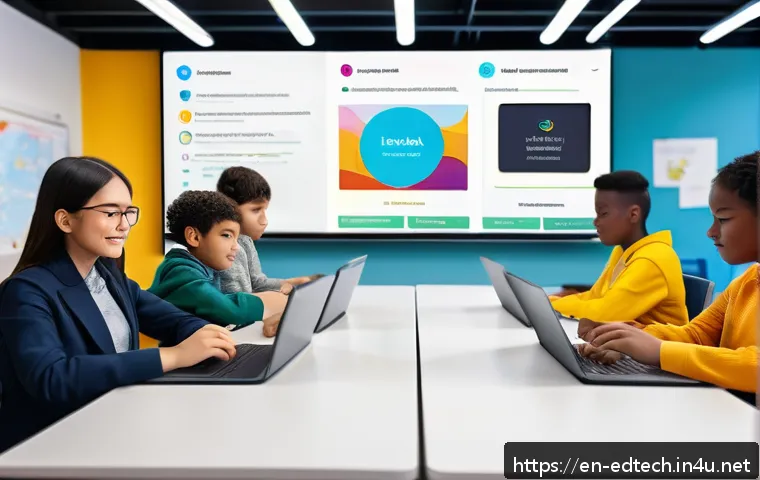
Hey everyone! Ever feel like learning has just… *changed*?
I certainly have. It wasn’t that long ago that textbooks and chalkboards were the undisputed kings of the classroom, right? But fast forward to today, and my smartphone has become a portable university, a skill-building boot camp, and even a personalized tutor, all rolled into one.
It’s absolutely wild how quickly the landscape of education has evolved, and honestly, it’s one of the most exciting shifts I’ve witnessed in my time navigating the digital world.
The sheer power of having vast knowledge and innovative learning tools literally at our fingertips, anytime, anywhere, is something I find myself constantly marveling at.
From interactive apps that make complex subjects click, to virtual reality experiences that transport you into historical events, educational technology, especially mobile learning, is no longer just a buzzword – it’s the heartbeat of modern education.
It’s revolutionizing how we acquire new skills, connect with educators, and even shape our careers. I’ve personally seen friends completely pivot their professional lives thanks to courses they completed entirely on their phones!
It’s not just about convenience; it’s about access, personalization, and truly engaging learning experiences that actually stick. It makes you wonder, doesn’t it, what incredible advancements are just around the corner?
How will AI tutors become even more sophisticated, offering bespoke learning paths tailored precisely to our needs? What new dimensions will augmented reality bring to our virtual classrooms, allowing us to interact with complex concepts like never before?
The possibilities are endless, and staying on top of these trends isn’t just fascinating; it’s practically essential for anyone looking to navigate our rapidly changing world successfully.
Trust me, you don’t want to be left behind on this one! Ready to unpack the incredible world of educational technology and mobile learning, and discover how it’s shaping our present and future?
Let’s dive deep into the fascinating details right now!
Hey there, fellow knowledge-seekers! It’s truly a new dawn for learning, and if you’re anything like me, you’re probably already tapping into its incredible potential right from the palm of your hand.
I mean, who would’ve thought that our phones would morph from communication devices into our most powerful educational companions? The way we engage with information, acquire skills, and even shape our careers has been utterly transformed.
It’s a shift that feels both incredibly futuristic and totally natural at the same time, and I’m absolutely loving being part of this ride. This isn’t just about convenience anymore; it’s about breaking down barriers, making learning truly personal, and creating experiences that actually stick.
I’ve seen firsthand how these advancements have empowered so many to chase new passions, conquer daunting subjects, and even completely redefine their professional paths.
It’s exhilarating to think about what’s next, and I’m here to explore it all with you, sharing what I’ve discovered and some fantastic ways you can leverage these tools.
Making Knowledge Accessible: The Mobile Revolution
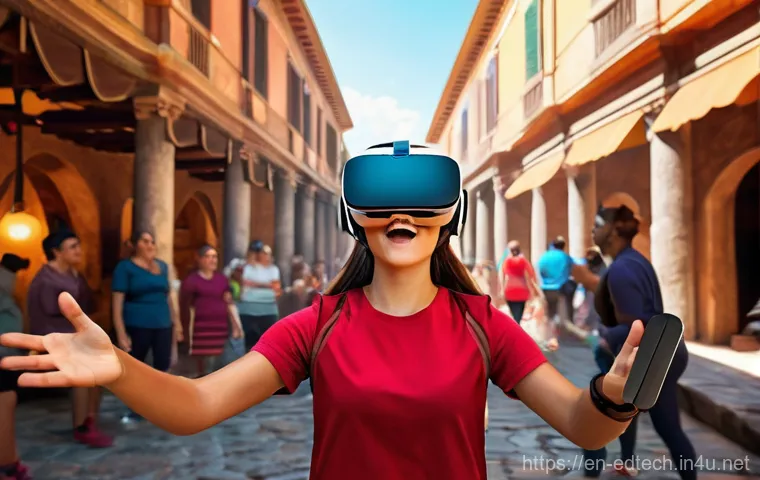
Remember when learning meant being glued to a desk, poring over heavy textbooks, or perhaps sitting in a lecture hall? Goodness, those days feel like a distant memory now! What a difference a few years make when you consider how our smartphones and tablets have literally put a library, a tutor, and a classroom right into our pockets. It’s no longer about carving out dedicated “study time” in a rigid schedule; it’s about micro-learning moments that fit seamlessly into the rhythm of our lives. I’ve personally found myself catching up on a fascinating podcast about neuroscience during my morning commute or diving into a quick language lesson while waiting for coffee. This flexibility isn’t just a nice-to-have; for so many, it’s a game-changer, making education truly achievable amidst busy work schedules, family commitments, or simply our fast-paced modern lives. The statistics really drive this home: a whopping 80% of the world’s population now uses smartphones, and it’s telling that more people solely use a smartphone (27%) than solely a computer (14%) for accessing information. This massive adoption fuels the mobile learning market, which is projected to reach an astounding $604.8 billion by 2033, growing from $70.3 billion in 2023. That’s not just growth; that’s an explosion of opportunity, and honestly, it warms my heart to see so many embracing learning on their own terms. It’s a testament to how profoundly mobile technology has changed our expectations for how we receive and interact with educational content, making it tailored, relevant, accessible, and wonderfully concise.
Your Pocket Companion: Apps for Every Learner
When I first started exploring mobile learning, I was genuinely overwhelmed by the sheer number of apps available. It’s like walking into a massive digital candy store, but instead of sweets, it’s filled with knowledge! From language acquisition to coding, photography, or even advanced academic subjects, there’s an app out there specifically designed to guide you. For example, Duolingo has completely transformed language learning into an addictive game, making it genuinely fun to pick up new phrases and vocabulary daily. I know friends who’ve mastered entire languages just from their phone! Then there are platforms like Skillshare, which offer video lessons across a huge spectrum of creative skills like graphic design, music, and writing. It’s incredible to think that you can pick up a new skill from an expert instructor while lounging on your couch. For those who love deep dives but are short on time, Blinkist summarizes bestselling non-fiction books and podcasts, offering bite-sized insights to expand your knowledge quickly. And for the more academically inclined, Khan Academy remains an unparalleled resource for subjects ranging from math to arts, offering high-quality, free educational content. These apps aren’t just convenient; they’re thoughtfully designed with interactive elements, gamification, and bite-sized lessons that cater to shorter attention spans and busy schedules, ensuring you can learn effectively in those small pockets of time throughout your day.
Learning On-the-Go: The Ultimate Convenience
The beauty of mobile learning, to me, lies in its unparalleled flexibility. There’s no longer a need to sacrifice personal time or juggle responsibilities to fit in an evening class or a weekend workshop. Your learning environment is wherever you are, whenever you’re ready. This “anytime, anywhere” access has been a game-changer for countless individuals, including myself. I’ve used mobile apps to brush up on a presentation while waiting for a flight, or to explore a new coding concept during a lunch break. It truly empowers you to seize those otherwise unproductive moments and turn them into valuable learning opportunities. This isn’t just anecdotal either; research consistently shows that mobile learning dramatically improves completion rates compared to traditional e-learning, with some studies indicating completion rates that are 45% higher. This isn’t surprising when you consider that 61% of employees prefer self-paced learning, which is increasingly done on mobile devices. The ease of access and the ability to learn in short, digestible chunks, known as microlearning, cater perfectly to our modern attention spans and busy lives. It’s about fitting education into your life, not the other way around, and that makes all the difference.
Beyond the Screen: Immersive Experiences with VR and AR
When I first heard about virtual and augmented reality being used in education, I admit, I pictured something out of a sci-fi movie. But let me tell you, experiencing it firsthand is absolutely mind-blowing and has completely reshaped my view of what learning can be! These technologies aren’t just cool gadgets; they’re powerful tools that transport you directly into the heart of a subject, making abstract concepts incredibly tangible and unforgettable. Imagine taking a virtual field trip to ancient Rome, walking through the Colosseum, and interacting with gladiators, all from your living room. Or, for those with a medical bent, visualizing the human circulatory system in 3D, literally flowing through the bloodstream to understand how your body fights viruses. It creates a level of engagement that textbooks simply can’t match. I’ve always been a visual learner, and for me, being able to manipulate 3D models of complex machinery or even dissect a virtual frog without the mess (thank goodness for Froggipedia!) makes the information stick in a way that mere reading never could. It fosters a deeper, more intuitive understanding, turning passive observation into active exploration. The potential for these immersive technologies to revolutionize everything from science and history to language learning is immense, bringing real-world scenarios and cultural experiences right to our fingertips.
Stepping Into the Subject: Virtual Reality’s Power
Virtual Reality (VR) is all about complete immersion, shutting out the physical world and dropping you into an entirely digital environment. Think about it: instead of just reading about the solar system, you could *be* in space, orbiting planets and understanding their scale and movements in a way that feels incredibly real. For me, that level of experiential learning is what makes VR so potent. Educational VR applications allow students to explore virtual laboratories, conduct experiments in a risk-free environment, or even attend conferences in virtual spaces. For professional training, it’s a game-changer; police departments, for instance, are using VR to train officers for complex scenarios like riots or arrests, allowing them to practice in a realistic yet safe setting before facing real-world situations. Language learning also gets a huge boost; apps like Mondly VR let you have conversations with virtual characters in diverse settings, making language acquisition far more natural and engaging than traditional methods. It’s not just about seeing; it’s about *doing* and *experiencing* within the learning process, which solidifies understanding and retention.
Augmented Reality: Blending Worlds for Better Understanding
While VR transports you to another world, Augmented Reality (AR) brings digital elements into *our* world, often using your smartphone camera or specialized glasses. I find this particularly exciting because it seamlessly integrates learning into our everyday environments. Imagine pointing your phone at a textbook and seeing a 3D model of a human heart pop out, pulsating and allowing you to rotate it and see its different components. Or using an app like SkyView, which overlays constellations and planets onto the night sky when you point your device upwards, making astronomy incredibly accessible and interactive. It’s a fantastic way to visualize complex topics and make learning more tangible and memorable. For chemistry, you could view a virtual model of an atom and interact with its subatomic particles, or for history, explore ancient artifacts as 3D projections right on your desk. AR bridges the gap between theoretical knowledge and real-world application, allowing for a hands-on, interactive learning experience without needing specialized labs or expensive equipment. This blending of the physical and digital enriches the learning process in such a dynamic way.
Personalized Pathways: AI’s Role in Tailored Learning
The idea of a learning experience crafted just for *me* used to sound like something out of a futuristic movie, right? But with the rise of Artificial Intelligence (AI) in education, that dream is very much a reality, and I’ve been absolutely fascinated by its potential. AI isn’t just about robots; it’s about incredibly smart algorithms that can analyze our learning styles, strengths, weaknesses, and even our emotional cues to create a truly bespoke educational journey. I’ve often wished for a tutor who *really* understood where I was struggling and could guide me precisely. That’s exactly what AI-powered learning environments are starting to offer. It’s like having a personal learning coach available 24/7, adapting the content, pace, and instructional methods to my unique needs in real time. This level of customization is phenomenal because it cuts through the ‘one-size-fits-all’ approach that often leaves some learners behind or bores others who are ready for more advanced topics. I’ve read studies highlighting that personalized learning through AI can significantly improve student motivation and academic performance, with some reports even suggesting a 30% increase in student performance compared to traditional settings. It makes learning more efficient and meaningful, truly empowering us to unlock our full potential.
AI as Your Personal Learning Coach
One of the most exciting aspects of AI in education is its ability to act as a hyper-personalized tutor. Forget the days of generic feedback or being unsure why you got a question wrong. AI-driven platforms can pinpoint exactly where you’re struggling, identify your learning gaps, and then provide targeted resources to help you master those specific areas. For instance, intelligent tutoring systems can offer adaptive feedback, suggest supplementary materials, or even adjust the difficulty level of exercises based on your real-time progress. I’ve seen how platforms using AI can recommend articles, videos, or practice problems that align perfectly with my current learning needs, saving me hours of sifting through irrelevant information. This isn’t just about academic subjects either; AI can even help foster social and emotional learning by understanding a student’s indicators and behavioral patterns, helping educators tailor support for a more holistic approach. It’s a powerful ally that helps reinforce knowledge and build confidence, making the learning process far less daunting and much more effective.
Adaptive Learning: Responding to Your Pace
We all learn at different speeds, and what works for one person might not work for another. That’s where adaptive learning, powered by AI, truly shines. It’s all about creating dynamic content delivery that adjusts to your individual learning pace and style. Imagine starting a course, and the system immediately understands whether you’re a visual learner, an auditory learner, or someone who thrives on hands-on practice. It then presents information in the most effective format for *you*, whether that’s through interactive simulations, videos, or text-based materials. If you grasp a concept quickly, it moves you forward without unnecessary repetition; if you need more time, it provides additional explanations, examples, or exercises until you’ve mastered it. This real-time responsiveness ensures that you’re always challenged but never overwhelmed. It makes sure that every moment you spend learning is optimized for your personal growth, leading to better knowledge retention and a deeper understanding of the subject matter. The shift from rigid, linear learning paths to flexible, personalized journeys is, in my opinion, one of AI’s greatest gifts to education.
Breaking Down Barriers: EdTech for Accessibility and Inclusion
One of the most inspiring transformations I’ve witnessed in educational technology is its incredible power to make learning truly accessible for *everyone*. For far too long, traditional education systems, despite their best intentions, often presented significant barriers for individuals with disabilities or those in underserved communities. But EdTech is actively changing that narrative, leveling the playing field in ways we could only dream of before. I’ve always believed that everyone deserves the chance to learn and grow, and seeing how technology is enabling this inclusiveness genuinely moves me. It’s about more than just convenience; it’s about providing fundamental access, enabling students to fully engage with curriculum, participate in classroom activities, and reach their full academic potential. From physical impairments like vision or mobility challenges to cognitive and neurodivergent conditions, the right tools can open doors that were previously closed, fostering environments where all students can truly thrive. This is about creating a truly equitable learning landscape, and honestly, it makes me feel so hopeful for the future.
Leveling the Playing Field for All Learners
EdTech isn’t just about making learning easier; it’s about making it possible for those who once faced insurmountable hurdles. For students with visual impairments, screen readers and text-to-speech tools convert digital content into spoken words, allowing them to engage with materials just like their sighted peers. I remember a friend who struggled with dyslexia finally finding joy in reading again thanks to text-to-speech apps that removed the visual strain. For those with mobility issues, speech-to-text technology lets them communicate and participate in discussions by simply speaking, while alternative input devices like eye-tracking software offer new ways to interact with digital platforms. Even something as simple as customizable interfaces, allowing for adjustments in font size, color contrast, and layout, can make a huge difference for students with low vision or certain cognitive disabilities. And let’s not forget the power of closed captioning and transcripts for videos, ensuring that students who are deaf or hard of hearing have equal access to audio-based content. These aren’t just features; they’re essential bridges to knowledge, ensuring that every student, regardless of their physical or cognitive abilities, has the tools they need to succeed.
Global Classrooms: Connecting Beyond Borders
Beyond individual accommodations, EdTech is also dismantling geographical and socio-economic barriers, truly creating a global classroom. The internet, coupled with accessible mobile devices, means that quality education is no longer confined to specific institutions or locations. Students in rural areas, who might not have access to in-person lectures, can now participate in online courses from top universities worldwide. I’ve seen online platforms bring together learners from different continents, collaborating on projects and sharing diverse perspectives in ways that would have been impossible just a decade ago. This connectivity fosters not only academic growth but also cultural competence and empathy, as students are exposed to different cultures and ways of thinking. Offline learning apps, like Kolibri, even allow content to be shared over local networks in areas with limited internet access, bridging the digital divide and ensuring learning continues even without constant connectivity. It’s about democratizing education, making knowledge a universal right rather than a privilege, and that’s something truly worth celebrating.
The Future is Now: Interactive and Global Learning
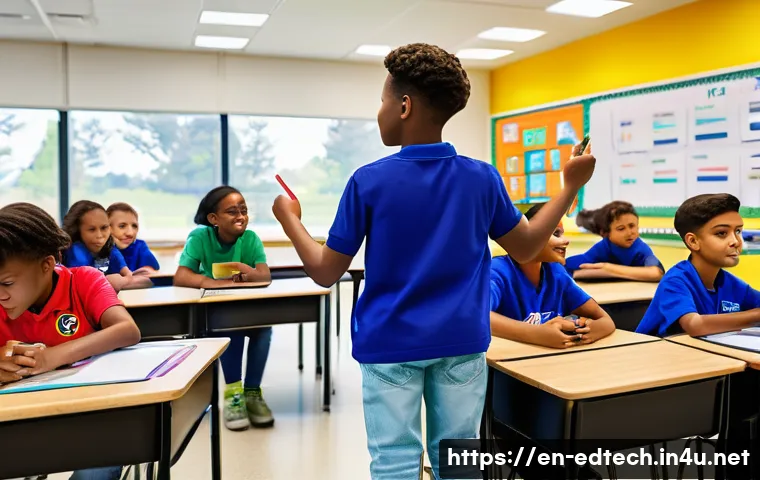
It’s genuinely thrilling to think about how much the learning landscape has shifted, and frankly, it feels like we’re just scratching the surface of what’s possible! The future of education isn’t some distant dream; it’s unfolding right before our eyes, shaped by technologies that are making learning more interactive, collaborative, and globally connected than ever before. I’ve always been a proponent of active learning, and EdTech is delivering that in spades, moving us far beyond passive information consumption. We’re talking about dynamic environments where students aren’t just absorbing facts but actively participating, creating, and engaging with content and each other. This transformation isn’t just about making learning more fun; it’s about preparing individuals for a rapidly evolving world, equipping them with the skills and adaptability needed to thrive in tomorrow’s workforce. The blend of mobile accessibility, immersive experiences, and personalized AI guidance is creating a rich tapestry of learning opportunities that are truly redefining what it means to be educated in the 21st century. It’s a continuous journey of discovery, and I’m excited to see where these innovations take us next!
Collaborative Learning in a Digital Age
One of the aspects I’ve grown to appreciate most in this new era of EdTech is how it fosters collaboration, even across vast distances. Gone are the days when group projects were limited to classmates in the same room. Digital learning platforms now offer a plethora of tools that allow students from different cities, or even countries, to work together seamlessly. Think about shared virtual whiteboards, real-time document editing, and video conferencing tools that make brainstorming and problem-solving a collective effort. I’ve personally used these tools to collaborate on content with people I’ve only met online, and the insights and diverse perspectives are invaluable. This kind of collaborative learning doesn’t just build academic skills; it cultivates essential soft skills like communication, teamwork, and cross-cultural understanding, which are absolutely crucial in today’s interconnected professional world. It prepares us for the globalized workforce, teaching us how to connect, share, and innovate with people from all walks of life, making the learning process far richer and more impactful.
Skill-Building for Tomorrow’s Workforce
The pace of change in the job market is dizzying, and traditional education alone often struggles to keep up. That’s why EdTech’s focus on practical, adaptable skill-building is so vital. Mobile learning platforms, in particular, are excelling at offering microlearning modules and specialized courses that directly address the skills employers are looking for *right now*. Whether it’s mastering a new software, learning data analytics, or diving into digital marketing, there are countless opportunities to acquire highly relevant skills quickly and efficiently. I’ve seen friends completely reskill or upskill for new careers using online certifications and specialized courses they completed entirely on their phones. This continuous learning model, facilitated by EdTech, is no longer just an advantage but a necessity for staying competitive. It empowers individuals to take ownership of their professional development, adapting their skill sets as industries evolve, and ensuring they remain valuable contributors in a constantly shifting landscape.
Making Learning Stick: Gamification and Engagement
Let’s be real, sometimes learning can feel like a chore, right? We’ve all been there, struggling to stay focused or remember information that just doesn’t seem to ‘click.’ That’s why I’m such a huge fan of gamification in education—it’s truly revolutionized how engaging and sticky learning can be! This isn’t just about adding a few points here and there; it’s about leveraging the psychology that drives human engagement, making learning feel less like work and more like an exciting challenge. I’ve found that when learning feels like a game, with clear goals, immediate feedback, and a sense of progress, I’m far more motivated to keep going and dive deeper. EdTech platforms are expertly weaving game elements like points, badges, leaderboards, and interactive challenges into educational content, transforming what could be mundane tasks into genuinely enjoyable experiences. This approach doesn’t just boost motivation; it significantly improves knowledge retention by making the learning process interactive and immersive. It’s truly amazing how turning learning into an adventure can make such a profound difference in how much we absorb and remember.
The Fun Factor: How Games Boost Retention
Think about your favorite video game. Why do you keep playing? Chances are, it’s because it’s fun, challenging, and gives you a sense of accomplishment. Gamification in e-learning harnesses these very same drivers. By introducing elements like progress bars, unlockable content, and virtual rewards, platforms create an ecosystem where every achievement feels meaningful. I’ve personally experienced how earning a “badge” for completing a module or seeing my name climb a “leaderboard” in a language app motivates me to push harder. It’s not just about competition, though; it’s about the innate human desire to improve and master new skills. The interactive nature of gamified learning means you’re not a passive recipient of information; you’re actively engaged, making choices that lead to consequences or rewards, which in turn leads to deeper processing and better memory encoding. This iterative process, often involving repetition and reinforcement through challenges and quizzes, ensures that the information isn’t just learned but truly absorbed and retained for the long haul. It makes learning an active, joyful pursuit, rather than a passive obligation.
Beyond the Points: Real-World Motivation
While points and badges are great motivators, gamification goes even deeper, connecting learning to real-world applications and inspiring intrinsic motivation. It gives learners the opportunity to see how their choices within the game translate to practical scenarios and how the knowledge they’re gaining can be applied outside the virtual classroom. For example, a gamified business simulation might challenge you to make strategic decisions that impact a virtual company’s success, immediately showing you the real-world implications of your learning. This experiential learning, even in a risk-free environment, is incredibly powerful for cementing skills. Moreover, gamification often fosters a mindset of continuous achievement and goal-setting. It taps into our natural curiosity and desire to discover, rekindling the spark of learning that might have been dulled by traditional methods. When learning is designed to be inherently engaging and to show tangible benefits, it inspires us to keep pushing our boundaries and seeking out new knowledge, not just for the rewards, but for the sheer joy of growth and mastery.
Turning Knowledge into Income: EdTech for Monetization
Okay, let’s talk about something incredibly exciting that often goes hand-in-hand with this explosion of EdTech: the incredible opportunities it presents for *monetization*. If you’re like me, someone who loves to learn and share knowledge, the idea of turning that passion into a sustainable income stream is seriously appealing. And honestly, EdTech platforms have made it more accessible than ever before to do just that. We’re living in what many call the “creator economy,” where sharing your expertise and skills can directly translate into earning potential. It’s no longer just about traditional teaching roles; anyone with valuable knowledge can become an educator, reach a global audience, and build a thriving business. I’ve personally explored various ways to leverage my own experiences and insights, and it’s genuinely empowering to see how many avenues exist to monetize what you know. From creating online courses to offering specialized workshops, the digital learning landscape is brimming with possibilities to generate revenue while genuinely helping others grow and develop their skills.
Monetization Models in EdTech
Navigating the world of monetizing online education can seem complex at first, but there are several proven strategies that platforms and creators are successfully leveraging. One of the most straightforward approaches, and one I often recommend for evergreen topics, is the one-time purchase model. This is great for short, focused courses or digital downloadables where learners pay a single fee for lifetime access. Think of a quick guide on mastering a specific software feature or a mini-course on effective blogging. Then there’s the incredibly popular subscription model, which I find brilliant for building recurring revenue and fostering long-term engagement. This is where learners pay a monthly or annual fee for ongoing access to a library of content or an entire academy. I love how this encourages continuous learning and keeps students engaged with new materials. Closely related are membership sites, which often offer tiered pricing, granting access to exclusive content, community forums, and even personalized coaching depending on the membership level. This creates a sense of community and provides added value beyond just the courses themselves. Beyond these, we also see pay-per-module options, ideal for modular content, and certification programs, which add significant value for learners looking to enhance their credentials and can command higher prices. Choosing the right model often depends on your content, audience, and business goals, but the flexibility offered by EdTech platforms makes experimenting and finding your sweet spot much easier.
| Monetization Strategy | Best For | Key Benefits | Considerations |
|---|---|---|---|
| One-Time Purchase | Evergreen courses, short guides, digital products | Simple, immediate revenue, perceived high value for specific content | Requires consistent marketing for new sales, limited recurring income |
| Subscription Model | Course libraries, ongoing content, community access | Recurring revenue, fosters long-term engagement, scalable | Needs continuous content updates, churn management |
| Membership Site | Exclusive content, community, tiered access, coaching | High perceived value, strong community, premium pricing potential | More complex to manage, requires high-value offerings |
| Certification Programs | Professional development, skill validation | High value for learners, commands higher prices, attracts professionals | Requires accreditation or strong reputation, content needs high quality |
| Sponsored Content/Affiliate Marketing | Blog posts, webinars, resource lists | Diversifies income, leverages audience trust, low direct content creation | Requires strong audience, ethical considerations for endorsements |
The Creator Economy: Sharing Your Expertise
If you’ve got a passion, a skill, or unique insights, the creator economy, fueled by EdTech, is practically begging you to share it! It’s such an exciting time to be an individual with expertise, because the barriers to entry for becoming an educator or content creator have dramatically lowered. You don’t need a fancy degree in education or a traditional publishing deal anymore. Platforms make it incredibly easy to package your knowledge into online courses, webinars, e-books, or even exclusive communities. I’ve personally seen how individuals who were once just enthusiasts have become respected instructors, building loyal followings and generating significant income by teaching what they love. This could be anything from a niche hobby like urban gardening, to advanced topics in coding, or even personal development strategies. The key is providing real value, delivering high-quality content, and engaging authentically with your audience. By investing in your craft and strategically using these platforms, you’re not just creating content; you’re building a brand, a community, and a sustainable business around your passion, which is incredibly rewarding. It’s about empowering yourself to turn your knowledge into both impact and income, and that, my friends, is a powerful combination.
Wrapping Things Up
Wow, what a journey we’ve been on together exploring the incredible landscape of modern learning! From the tiny screens in our pockets to immersive virtual worlds and intelligent AI tutors, it’s clear that education is no longer confined to traditional spaces. I genuinely hope you’re as excited as I am about these advancements and the endless possibilities they open up for personal growth, skill development, and even exciting new career paths. Remember, the power to learn, grow, and even earn from your unique knowledge is more accessible than ever before, truly democratizing expertise. So go on, dive in, experiment with these groundbreaking tools, and truly make learning an integral, joyful, and deeply enriching part of your everyday life. The future of education isn’t just coming; it’s here, and we’re all active participants in shaping it!
Useful Information to Know
1. Start Small, Explore Widely: Don’t feel pressured to subscribe to every platform at once. Begin by trying free versions of popular apps like Duolingo for languages or Khan Academy for academic subjects. See what clicks with your learning style and specific needs before committing to a paid service. There’s a vast ocean of high-quality free content out there, and it’s a fantastic, low-commitment starting point for discovery and finding what truly resonates with you.
2. Optimize Your “Micro-Moments”: Think about those small pockets of time in your day—your commute, waiting in line at the coffee shop, or even during a quick lunch break. These are golden opportunities for micro-learning! Dedicate just 10-15 minutes to a language lesson, catching up on a summarized book through an app like Blinkist, or tackling a quick skill-building exercise on your phone. These consistent, short bursts of learning truly add up remarkably fast and make education feel integrated, not intrusive.
3. Dive into Immersive Demos: If you’re curious about the potential of VR or AR in education but don’t own specialized gear, look for educational demos available on popular app stores or even YouTube. Many museums, historical sites, and science institutions offer free augmented reality experiences that bring history, art, and complex scientific concepts to life right in your living room, often just using your smartphone. It’s a fantastic, accessible way to experience the future of learning firsthand.
4. Personalize Your AI Experience: When engaging with AI-powered learning platforms, remember that they learn from you! Don’t be afraid to actively give feedback or adjust settings. The more you interact and indicate what works best for your learning style (or what doesn’t quite hit the mark), the better and more accurately the AI can adapt and truly become your ideal personal learning coach. It’s a dynamic, two-way street that significantly maximizes your learning efficiency and effectiveness.
5. Consider Sharing Your Own Expertise: If you’ve got a passion, a unique skill, or specialized knowledge you’re enthusiastic about, remember the vibrant creator economy! Platforms like Teachable, Thinkific, or Skillshare make it easier than ever to package your insights into online courses, webinars, or even exclusive digital communities. Start by thinking about a specific problem you can genuinely help others solve, then explore these platforms as a potential instructor. Your unique insights and experience are incredibly valuable!
Key Takeaways
At its core, the future of learning is profoundly shaped by accessibility, personalization, and deep engagement. Mobile technology ensures that high-quality education is literally always at our fingertips, effectively breaking down traditional geographical and time barriers. Immersive virtual and augmented reality experiences are transforming abstract concepts into tangible, unforgettable realities, making learning an active adventure rather than a passive observation. Furthermore, artificial intelligence is serving as our bespoke personal guide, diligently tailoring educational journeys to our individual needs, paces, and preferred learning styles. Crucially, EdTech is emerging as an extraordinarily powerful force for inclusion, diligently leveling the playing field for diverse learners across all abilities and backgrounds. And for those with expertise to share, it’s simultaneously opening up incredible monetization avenues, allowing passionate individuals to build businesses around their knowledge. This continuously evolving landscape is empowering us not just to learn more efficiently, but to truly thrive, adapt, and make a meaningful impact in an ever-changing and interconnected world.
Frequently Asked Questions (FAQ) 📖
Q: How exactly has mobile learning changed the game for someone like me who’s juggling a busy life?
A: Oh, this is such a fantastic question and honestly, it’s something I’ve personally experienced myself! I mean, think about it: remember when you had to block out a huge chunk of time, pack your bags, and physically go somewhere to learn something new?
Those days feel like a lifetime ago. What mobile learning has truly revolutionized for busy people like us is the sheer flexibility and accessibility it offers.
I’ve found that it completely eradicates those traditional barriers of time and location. You can literally fit learning into those tiny pockets of your day that used to be wasted – like your morning commute, waiting in line for coffee, or even just during a quick break at work.
It’s not just about convenience; it’s about empowerment. Suddenly, that online marketing course or a new language lesson isn’t a huge commitment you have to squeeze into an already packed schedule.
It becomes something you can chip away at, little by little, making progress without feeling overwhelmed. I’ve seen friends totally transform their careers by picking up new skills during their lunch breaks, all thanks to their phones.
It’s about making education truly work around your life, not the other way around.
Q: What’s truly exciting about the future of educational tech, beyond just apps on my phone?
A: This is where my inner tech-nerd really gets excited! While apps on our phones are amazing, they’re just the tip of the iceberg, right? When I look at what’s coming, two areas really jump out: AI tutors and the immersive worlds of augmented and virtual reality (AR/VR).
Imagine having a personalized AI tutor that really understands your learning style, knows exactly where you’re struggling, and can adapt its teaching methods in real-time, just like a human tutor, but available 24/7.
It’s not just about giving you the right answer; it’s about guiding you through the process of understanding, offering tailored exercises, and even helping you practice conversations in a new language.
Then there’s AR/VR – oh my goodness! We’re talking about stepping into a virtual anatomy lab to dissect a frog without, well, an actual frog, or exploring ancient Rome as if you’re actually walking its streets.
My mind goes wild thinking about how this could transform subjects that used to feel abstract. Complex engineering concepts, historical events, even molecular biology – they all become tangible, interactive experiences.
It feels like we’re moving from just consuming information to truly living the learning experience, and honestly, that’s what makes me feel like we’re on the cusp of something truly magical.
Q: With all these changes, how can I actually leverage these new learning tools to genuinely boost my career or personal skills?
A: This is the million-dollar question, isn’t it? It’s one thing to marvel at the technology, but another to actually make it work for you. From what I’ve seen and personally tried, the biggest key is intentionality and consistency.
First, identify what skill or knowledge gap you want to fill. Don’t just browse aimlessly. Once you have a target, dive into platforms that offer structured courses or micro-credentials – think Coursera, edX, or even specialized apps for coding or language learning.
What I’ve found super effective is to schedule dedicated, even if short, learning times. Treat it like a meeting you can’t miss. Also, don’t be afraid to experiment with different formats.
Some people thrive with interactive videos, others with gamified apps, and some with AI-driven practice sessions. The beauty of modern ed-tech is the variety!
And here’s a real game-changer: connect with learning communities online. Whether it’s a forum for a specific course or a group on LinkedIn, having peers to discuss with, ask questions, and even hold you accountable can seriously amplify your learning.
Remember, it’s not just about passively watching a video; it’s about active engagement, practice, and applying what you learn. The world is moving fast, and staying curious and adaptable using these incredible tools is, in my opinion, the ultimate career hack.